Terraform State Management for the Terraform Associate Exam
Understand local versus remote state, locking, backends, and drift so state questions stop being the part of Terraform exam prep that slows you down.
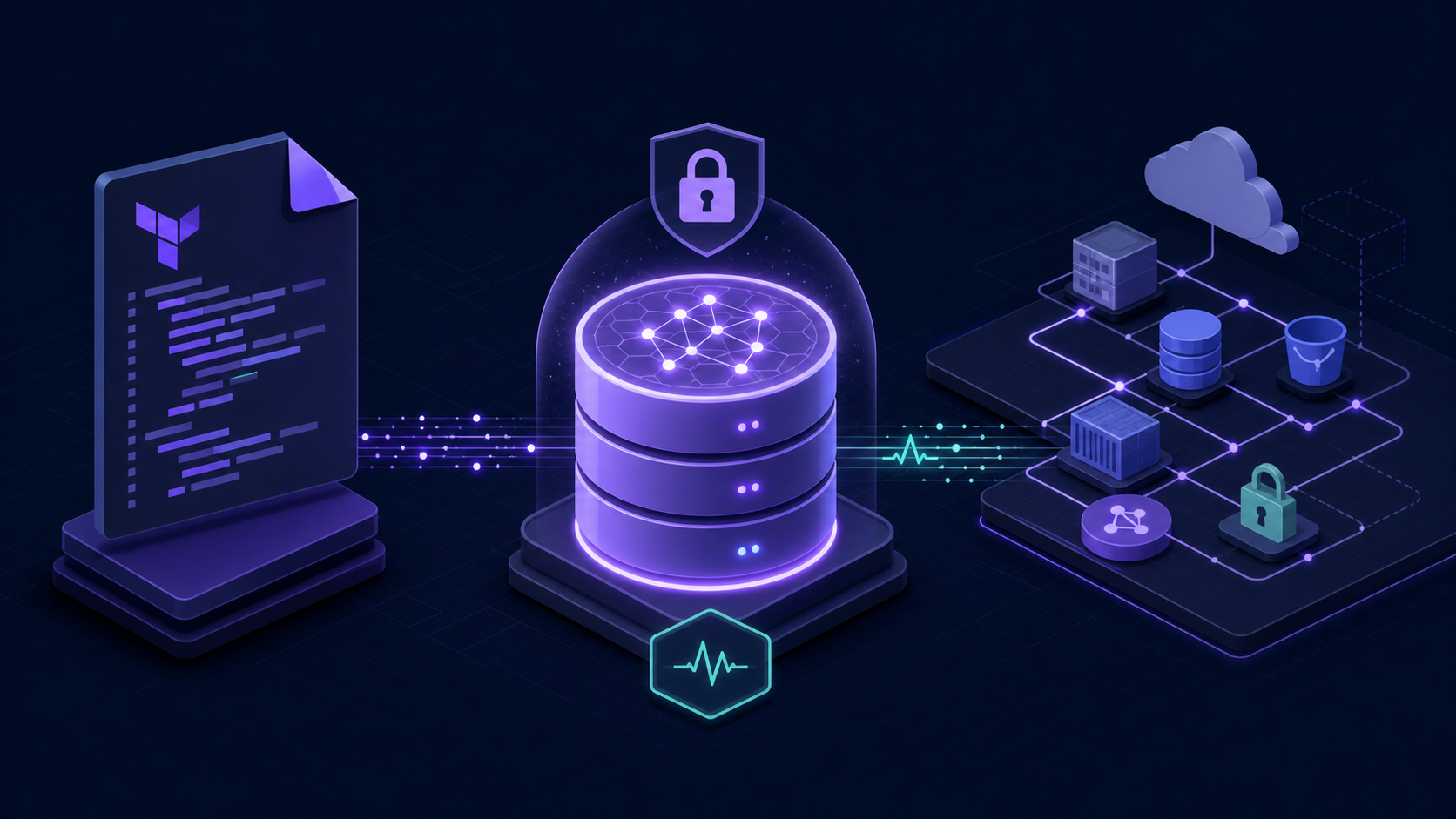
Terraform state is one of the highest-value topics on the Terraform Associate exam because it sits underneath nearly every Terraform workflow. If you understand what state is, where it lives, why teams protect it, and how Terraform uses it to detect changes, you remove a large chunk of uncertainty from the exam.
HashiCorp's Associate 004 content list explicitly calls out four state-management areas: the local backend, state locking, configuring remote state with the backend block, and managing drift. Those are not edge cases. They are core exam material. You can confirm the mapping on HashiCorp's official exam content list.
What Terraform state actually does
State is Terraform's record of the resources it manages and the relationships between configuration and real infrastructure. Without state, Terraform would not reliably know what already exists, what changed, or what needs to be updated next.
For exam purposes, the key idea is simple: the configuration is your desired state, and the state file helps Terraform compare that desired state with reality.
Local backend vs remote backend
The local backend stores state on the machine running Terraform. That is fine for learning or solo experimentation, but it becomes risky as soon as multiple people need the same workspace. A local file is easy to lose, easy to overwrite, and hard to coordinate.
A remote backend moves the state to shared storage. The exam may ask why teams prefer remote state, and the answer usually revolves around collaboration, durability, centralized access, and support for features like locking.
| Backend type | Best for | Main risk |
|---|---|---|
| Local | Single-user learning and quick experiments | Poor collaboration and weaker operational safety |
| Remote | Team workflows and repeatable operations | Requires deliberate backend configuration and access control |
Why state locking matters
State locking exists to stop concurrent operations from corrupting or racing against the same state. If two operators run Terraform against the same workspace at the same time, both runs can make decisions from stale assumptions. Locking reduces that risk by ensuring one operation owns the state during the run.
On the exam, if you see a question about multiple team members running Terraform at once, state locking is usually the concept being tested.
How backend configuration fits in
HashiCorp expects candidates to understand that backends are configured in the backend block and initialized through the normal Terraform workflow. You do not need to memorize every backend type, but you should understand what a backend controls: where state is stored and how Terraform accesses it.
This is also one reason terraform init matters so much. Backend and provider setup both happen there. If you want the full workflow context around that command, read our core workflow article.
Drift is the state topic many people underprepare for
Drift happens when real infrastructure no longer matches what Terraform expects. That often occurs after manual changes outside Terraform. The exam may frame drift as a troubleshooting or maintenance issue, but the underlying idea is the same: Terraform needs an accurate picture of reality to create safe plans.
When drift appears, Terraform can surface differences during planning, refresh, or state-aware maintenance actions. You do not need to become a state surgeon for the associate exam, but you should understand why drift matters and why teams try to limit manual out-of-band changes.
State and shared team workflows
State questions often connect to broader operational practices:
- Centralized state supports team collaboration.
- Locking prevents overlapping runs.
- Remote storage reduces dependence on one laptop.
- Careful state handling lowers the chance of destructive mistakes.
Those ideas also connect naturally to HCP Terraform, which packages remote operations and team-oriented workflows into a managed platform. We cover that in our HCP Terraform guide.
Common exam traps around state
Here are the mistakes that show up most often in state questions:
- Thinking state is the same thing as configuration. It is not.
- Assuming local state is the best option for team workflows. It usually is not.
- Ignoring why locking exists.
- Treating manual infrastructure changes as harmless. They often create drift.
How to study state without overcomplicating it
Start by being able to explain state out loud in plain English. Then make sure you can answer these three questions quickly:
- Where is the state stored?
- Who needs access to it?
- What happens if reality changes outside Terraform?
If you can answer those confidently, most state-related exam questions become far easier.
FAQ
Why is Terraform state important?
State helps Terraform track managed resources and compare declared configuration to real infrastructure so it can plan and apply changes accurately.
What is the difference between local and remote state?
Local state lives on the machine running Terraform. Remote state lives in shared storage or a managed platform and is better suited for collaboration.
What problem does state locking solve?
It prevents overlapping operations from acting on the same state at the same time, which lowers the risk of conflicting or unsafe changes.
Bottom line
If you want a quick way to improve your Terraform Associate readiness, learn state management well. It connects directly to workflow, collaboration, maintenance, and operational safety.
When you want to see whether you can recognize state questions under pressure, run through the Terraform Associate practice tests. They are useful study material because they make you distinguish backends, locking, drift, and collaboration scenarios quickly instead of assuming the topic is clear just because the definitions look familiar on the page.