Terraform Associate 004 Exam Objectives Explained
A topic-by-topic breakdown of the Terraform Associate 004 objectives so you know what HashiCorp expects you to understand before test day.
If you search for Terraform Associate 004 exam objectives, you usually find two extremes: a thin outline that repeats the headings, or a broad exam guide that skips what each domain really means. This article sits in the middle. It translates HashiCorp's current objective list into a practical study map so you can decide what to review first and what deserves hands-on practice.
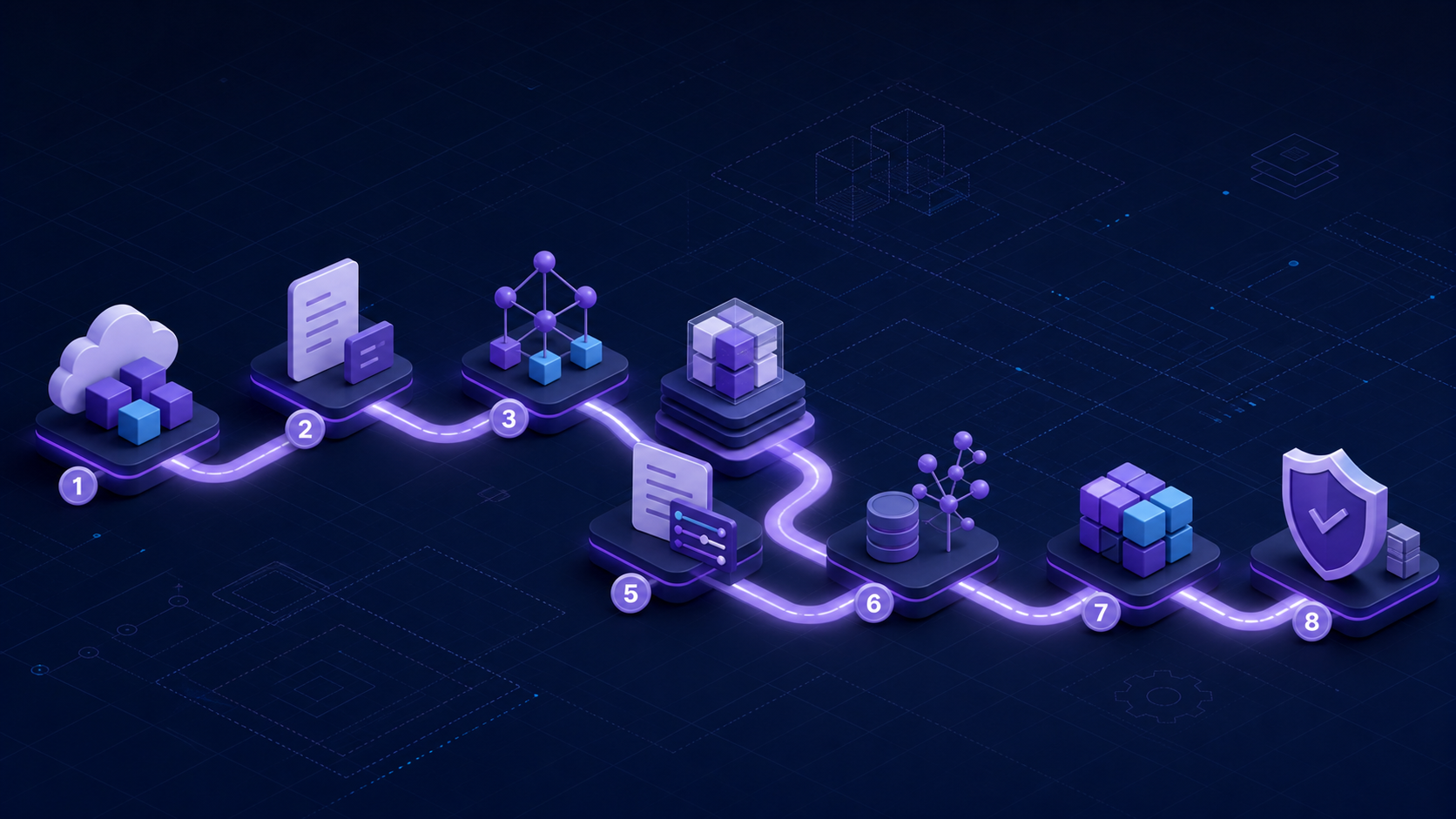
HashiCorp's official content list for the current associate exam groups the material into eight domains: infrastructure as code, Terraform fundamentals, the core workflow, configuration, modules, state management, maintaining infrastructure, and HCP Terraform. HashiCorp also states that the tutorials may use specific cloud providers for examples, but provider-specific knowledge is not required for the exam. That detail matters because it tells you where to spend your time: on Terraform behavior, not cloud trivia. You can review the official exam map on HashiCorp's Associate 004 content list.
1. Infrastructure as code is the foundation, not filler
The exam starts with infrastructure as code because Terraform only makes sense if you understand why teams adopt it. Be ready to explain what IaC is, why teams prefer repeatable configuration over one-off console changes, and how Terraform supports multi-cloud and service-agnostic workflows. This domain is more conceptual than command-heavy, but it still shows up in scenario questions.
A simple way to frame it is this: Terraform gives teams a versioned, reviewable, repeatable way to define infrastructure. If a question contrasts manual provisioning with Terraform-managed workflows, the exam almost always favors repeatability, auditability, and consistency.
2. Terraform fundamentals are about providers, plugins, and setup behavior
The fundamentals section covers how Terraform installs providers, how provider requirements work, and how version constraints and the dependency lock file shape repeatable runs. If you are fuzzy on provider installation, aliases, or the difference between a provider requirement and a provider block, fix that early. These ideas show up again in module and workflow questions.
If you want a focused deep dive on this area after reading this article, the best follow-up is our modules and providers guide.
3. The core workflow is where many candidates lose easy points
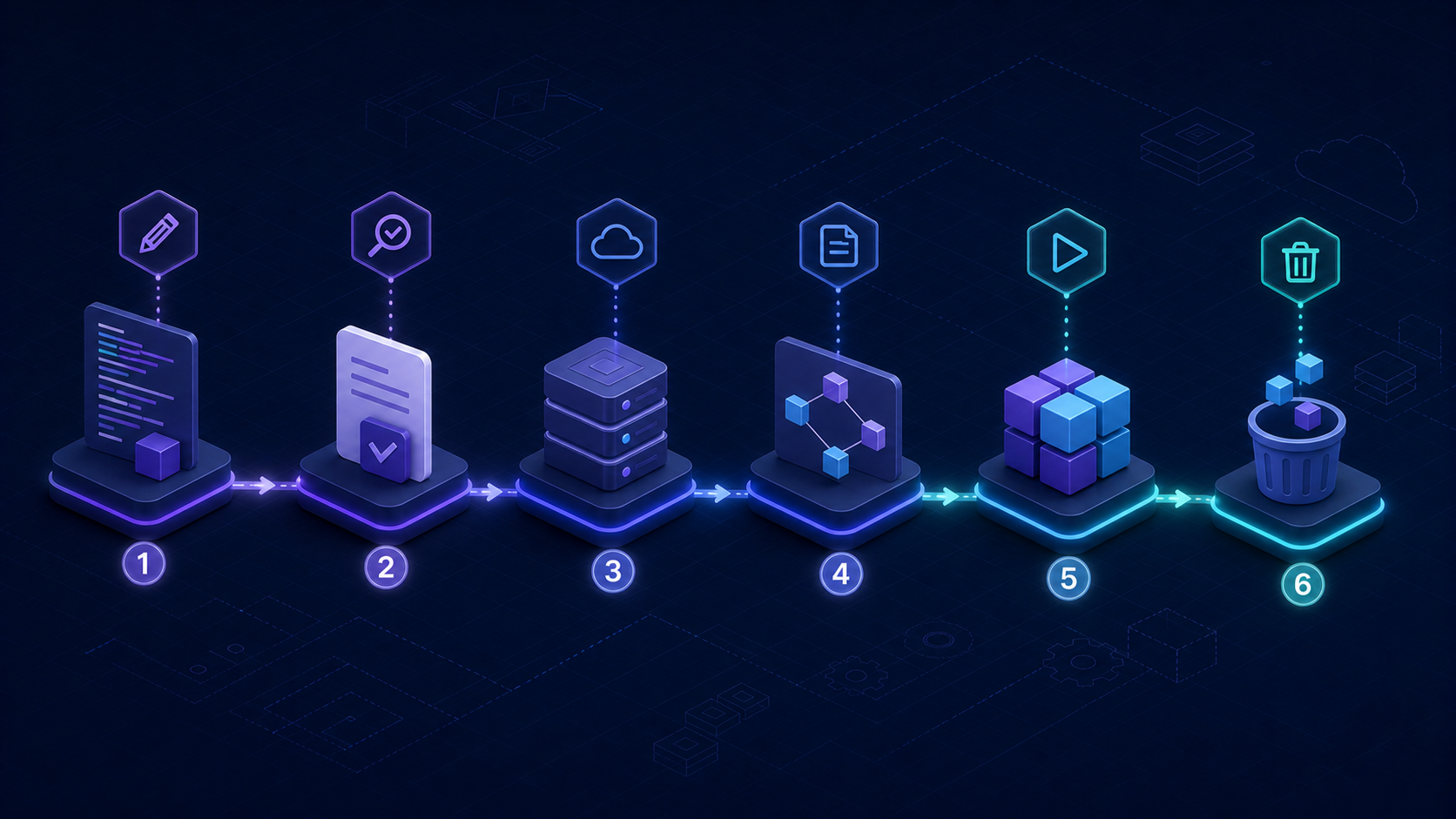
HashiCorp expects you to understand the sequence around init, validate, plan, apply, destroy, and fmt. You do not need to memorize every flag, but you do need to know why each command exists and where it fits.
A useful mental model is:
initprepares the working directory and installs what Terraform needs.validatechecks whether the configuration is structurally valid.planshows intended changes before anything is created or changed.applyexecutes the approved plan.destroyremoves Terraform-managed resources.fmtkeeps configuration readable and standardized.
For a dedicated walkthrough with exam traps and study tips, see our Terraform core workflow article.
4. Configuration questions test how Terraform thinks
This domain goes past syntax. Expect questions on resource versus data blocks, variables and outputs, complex types, expressions, functions, references, dependencies, and validation conditions. The common thread is understanding how Terraform builds relationships between declared objects.
If you can read a short configuration and explain what depends on what, where a value comes from, and whether Terraform is creating or reading something, you are in good shape.
5. Modules deserve their own study block
HashiCorp treats modules as a separate objective for good reason. Modules are central to reusable Terraform design, and the exam expects you to understand sources, inputs, outputs, scope, and versioning. You should know how a root module passes values into child modules, how outputs expose values back upward, and why version pinning matters for consistency.
6. State management is a major scoring area
State is not a side topic. It is how Terraform keeps track of the real infrastructure it manages. Candidates should be comfortable with local backends, remote backends, state locking, and drift. If you are not yet comfortable explaining why teams move state out of a local file and into shared remote storage, spend time there.
We break that topic down in more detail in our Terraform state management guide.
7. Maintenance topics reward real-world familiarity
The exam content list also covers importing existing infrastructure, inspecting state with the CLI, and knowing when verbose logging is useful. These are the kinds of objectives that feel secondary until you see them in a scenario question. If a team inherits existing resources, Terraform import matters. If a run behaves unexpectedly, logging matters.
8. HCP Terraform is not optional on 004
The current exam version includes HCP Terraform objectives around workspaces, projects, collaboration, governance, and integrations. That does not mean you need to be a platform administrator, but you should understand what HCP Terraform adds beyond running everything only from a laptop.
If this is the newest area for you, read our HCP Terraform guide for Associate 004 after this article.
How to prioritize your study time
If you are starting from scratch, do not study the domains in random order. A better sequence is:
- Learn IaC and Terraform fundamentals.
- Practice the core workflow until it feels routine.
- Move into configuration, modules, and state.
- Finish with maintenance tasks and HCP Terraform.
That order mirrors how Terraform is actually used. It also reduces the chance that later topics feel abstract because the earlier mechanics are still shaky.
FAQ
Does the Terraform Associate 004 exam require cloud-provider expertise?
No. HashiCorp's official exam content list explicitly says provider-specific knowledge is not necessary for the exam, even if tutorials use provider examples.
Is HCP Terraform part of the current exam?
Yes. The current Associate 004 content list includes HCP Terraform objectives covering infrastructure creation, collaboration and governance, workspace and project organization, and integrations.
What is the best way to use the objective list?
Use it as a coverage checklist, not just a reading list. For each objective, ask whether you can define it, recognize it in a scenario, and explain the related Terraform behavior.
Bottom line
The Terraform Associate 004 exam is broad, but it is not random. The objective list tells you exactly what HashiCorp wants to measure. If you study by domain instead of by vague tips, your preparation becomes much more efficient.
If you want a wider overview of timing, scoring mindset, and study sequencing, start with our Terraform Associate 004 exam guide.
When you are ready to check whether the material is sticking, use the Terraform Associate practice tests. They are useful study material because they turn the objective list into active recall, show you exactly which domains are still weak, and force you to separate close concepts like modules versus providers or plan versus apply before the real exam does.