Terraform in the Workplace: Why Teams Use It
Learn how Terraform is used in the workplace, why teams adopt infrastructure as code, and why employers care about practical Terraform skills.
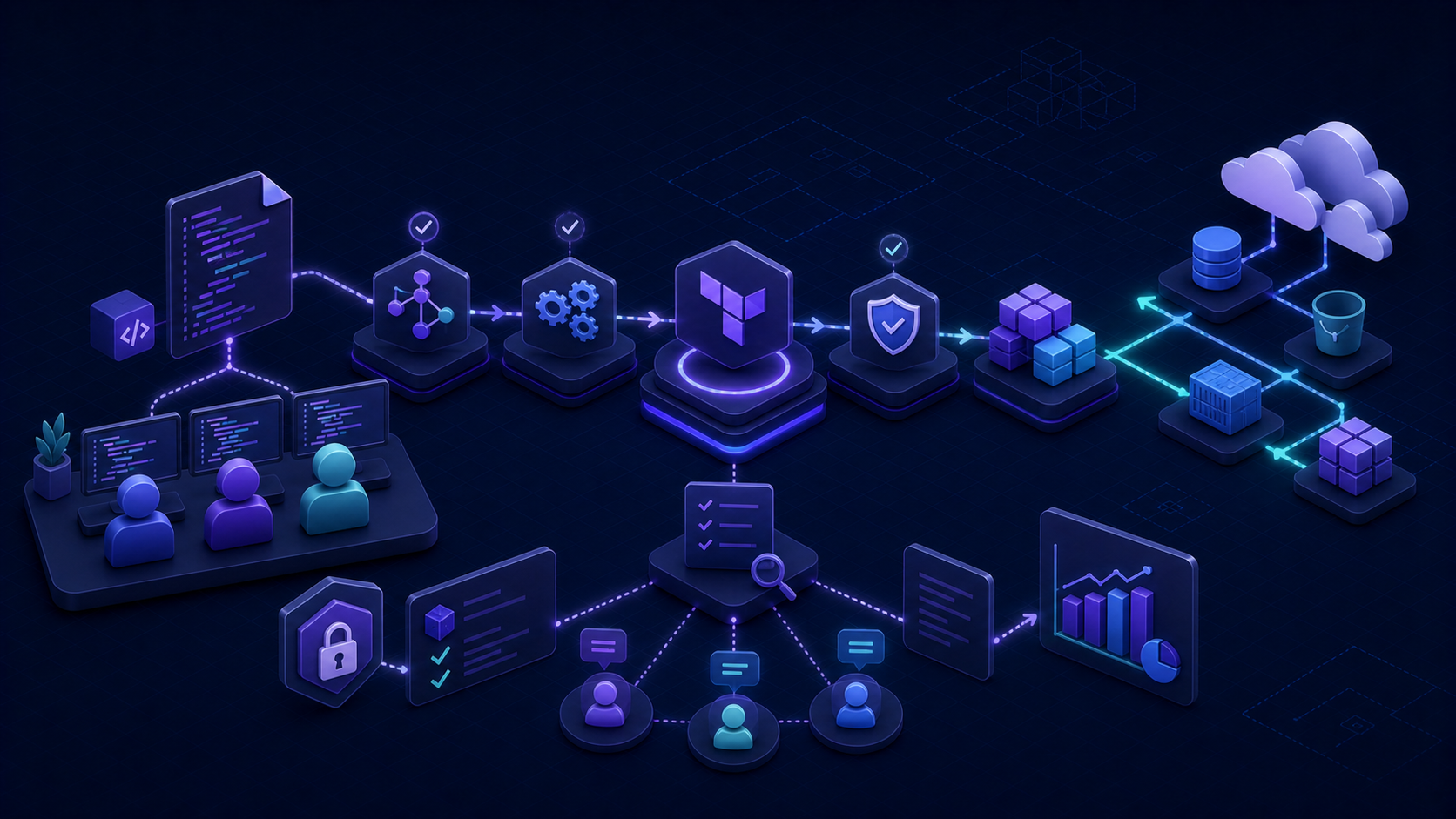
Terraform in the workplace looks different from a lab exercise. In real teams, Terraform is less about typing a few resource blocks and more about creating repeatable infrastructure workflows that multiple people can trust. That is one reason employers care about it so much. When a team standardizes on Terraform, it gains a shared way to define, review, deploy, and maintain infrastructure without depending on ad hoc console clicks.
For candidates preparing for the Terraform Associate exam, this matters because many exam topics map directly to how Terraform is used at work. State, modules, workflow, collaboration, and HCP Terraform are not just test objectives. They are the parts of Terraform that make it valuable to engineering teams.
Why teams use Terraform at work
The simplest answer is consistency. Terraform lets teams define infrastructure as code, store it in version control, review changes before execution, and reuse proven patterns instead of rebuilding them from scratch each time. That improves reliability and reduces the gap between what a team thinks it deployed and what actually exists.
In workplace terms, Terraform helps with:
- Standardized infrastructure creation across teams and environments
- Safer change management through plan review
- Reusable modules for common platform patterns
- Better onboarding because infrastructure is documented in code
- More predictable environments from development through production
Those benefits are a big part of why the certification covers the core workflow, state management, modules, and HCP Terraform. If you want the exam-first version of that map, start with our Terraform Associate 004 objective breakdown.
Terraform changes how teams collaborate
Without infrastructure as code, infrastructure knowledge often gets trapped in a few people or scattered across manual runbooks. Terraform changes that by making infrastructure visible and reviewable. Team members can inspect a plan, trace variables, understand module boundaries, and reason about changes before anything is applied.
This is one reason topics like state management and the Terraform core workflow matter so much. They are not academic details. They are the mechanics that make team collaboration safer.
Why employers care about Terraform skills
Employers usually do not care about Terraform because it is trendy. They care because infrastructure mistakes are expensive. A candidate who understands Terraform can contribute to more consistent provisioning, cleaner environment management, and better operational discipline.
From an employer's perspective, Terraform skills often signal that a candidate can work with:
- Version-controlled infrastructure changes
- Repeatable deployment workflows
- Multi-environment configuration management
- Shared state and team coordination
- Infrastructure review and troubleshooting
That does not mean Terraform is the only skill that matters. It does mean it is a practical skill with obvious day-to-day value inside cloud, platform, SRE, and DevOps teams.
What Terraform looks like in a real team workflow
A typical Terraform workflow at work is not one engineer editing infrastructure in isolation. It often includes version control, pull requests, plan review, approvals, remote state, reusable modules, and environment-specific variables. HCP Terraform or another remote workflow layer may also be part of the process.
That is why workplace Terraform usually depends on strong basics in:
- modules and providers for reuse and consistency
- state and locking for safe shared operations
- HCP Terraform for remote runs and governance
- environment separation for dev, staging, and production workflows
How this helps you study for the certification
One of the best ways to study Terraform is to think like a team, not only like a solo learner. Instead of asking what a command does in isolation, ask why a team would use it. Instead of memorizing that remote state exists, ask what problem it solves when several engineers touch the same infrastructure.
That shift usually makes the exam easier. The certification rewards understanding how Terraform behaves in practical situations, and workplace thinking gives you better context for those questions.
FAQ
How is Terraform used in the workplace?
Teams use Terraform to define infrastructure as code, review changes before deployment, reuse infrastructure patterns, manage multiple environments, and coordinate changes more safely.
Why do employers value Terraform skills?
Terraform skills help reduce manual infrastructure work, improve consistency, and support more reliable cloud and platform operations.
Does workplace Terraform connect to the Associate exam?
Yes. Many core exam topics, including workflow, state, modules, and HCP Terraform, reflect how real teams use Terraform in practice.
Bottom line
Terraform is valuable at work because it makes infrastructure more repeatable, reviewable, and manageable across teams. That is exactly why employers care about it and why the certification focuses on the topics it does.
If you want the career-focused follow-up to this article, read our guide on using Terraform certification in your job search.
If you want study material that feels closer to real engineering decision-making, use the Terraform Associate practice tests. They are useful because they force you to reason through the same workflow, state, module, and environment tradeoffs that make Terraform valuable in the workplace.